NETWORK UNLOCKING SOLUTIONS,MAKE MONEY ONLINE, FREE BTC, LATEST TECH NEWS , FREE MONEY OMLINE MONEY, russia ukraine war, russia south korea, russia targets south korea, russia japan, russia japan news, vladimir putin nato, vladimir putin ukraine war, ukraine war news, ukraine war latest news, putin south korea japan, putin on ukraine war, putin on nato, putin news, putin news today, russia ukraine war news, russia war plans, russia leaked documents
NETWORK UNLOCKING SOLUTIONS,MAKE MONEY ONLINE, FREE BTC, LATEST TECH NEWS , FREE MONEY OMLINE MONEY, russia ukraine war, russia south korea, russia targets south korea, russia japan, russia japan news, vladimir putin nato, vladimir putin ukraine war, ukraine war news, ukraine war latest news, putin south korea japan, putin on ukraine war, putin on nato, putin news, putin news today, russia ukraine war news, russia war plans, russia leaked documents
Editor's note: This is a developing story and is being updated.
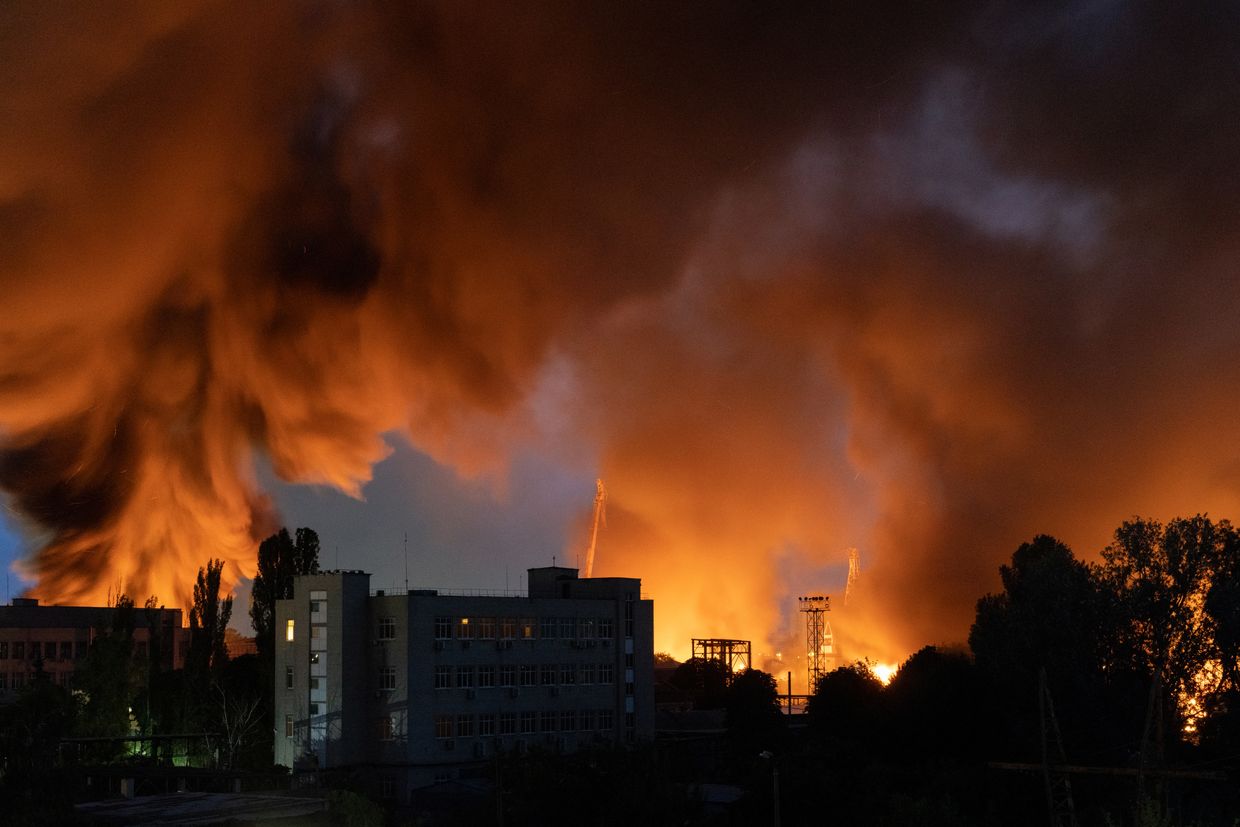
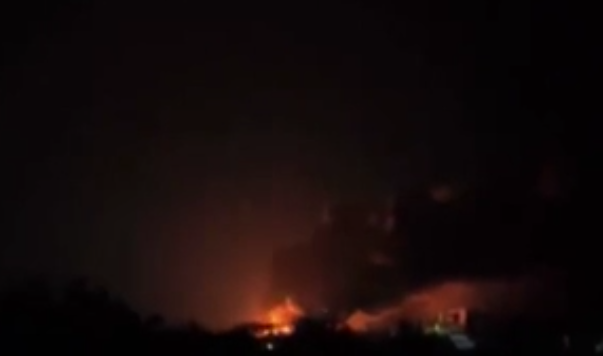
A Russian logistics hub in occupied Luhansk Oblast is on fire amid a reported drone attack overnight on July 1.
"Russian logistics in temporarily occupied Luhansk are burning," head of the center for disinformation Andriy Kovalenko said.
The drone attack was reported by local media, publishing what appear to be videos of the burning logistics hub and the sound of drones.
Russian state media reported that over 20 drones were flying over Luhansk Oblast, citing Russian proxies in the region.
Ukraine's Luhansk Oblast (Nizar al-Rifai/The Kyiv Independent)
Ukraine's military regularly strikes military targets in Russian-occupied territories and deep within Russia in an attempt to diminish Moscow's fighting power as it continues its war against Ukraine.
Ukraine's military intelligence (HUR) destroyed three Russian air defense systems using drones in the occupied Zaporizhzhia Oblast on June 14.
"Strike drone masters of the Department of Active Operations of the HUR of the Ukrainian defense ministry discovered and destroyed expensive air defense systems of the Russian invaders in the temporarily occupied territory of the Zaporizhzhia region," HUR reported in a post to Telegram.
A Russian Buk-M3, a Pantsyr S1, and a 9S19 Imbir radar from the S-300V air defense system were destroyed in the Ukrainian drone attack.
U.S. Special Representative Keith Kellogg has pushed back against Russian claims that Ukraine and the United States are responsible for delaying peace negotiations, arguing that it is Moscow that continues to obstruct efforts to end the war it initiated.
"Peskov’s recent comments on the state of negotiations are Orwellian. Russian claims that it is the US and Ukraine stalling peace talks are unfounded. President Trump has been consistent and adamant about making progress to end the war. We urge an immediate ceasefire and a move to trilateral talks to end the war. Russia cannot continue to stall for time while it bombs civilian targets in Ukraine," Kellogg said on X.
Kremlin spokesperson Dmitry Peskov on June 29 accused Washington and Kyiv of holding up progress, stating that future developments in peace talks depend on Ukraine’s stance, the effectiveness of U.S. mediation, and the situation on the battlefield.
“A lot depends, naturally, on the position of the Kyiv regime,” Peskov said in a televised interview with Belarus 1 TV, according to Reuters. “It depends on how effectively Washington's mediating efforts continue,” he added.
Despite those remarks, Russia has rejected a U.S.-backed ceasefire proposal and continued its attacks on Ukrainian cities launching record numbers of drones against Ukrainian cities. Earlier this month, Russian President Vladimir Putin openly stated that “all of Ukraine is ours,” raising further doubts about the Kremlin’s willingness to engage in meaningful negotiations.
Peskov’s interview aired as the war moves into its fourth summer with no comprehensive ceasefire in place. Although two rounds of peace talks between Russia and Ukraine took place in Istanbul this year—on May 16 and June 2—the discussions have not led to any breakthrough on ending hostilities.
While the Istanbul meetings led to notable prisoner exchanges, they produced no tangible progress toward peace.
Russia has lost around 1,020,010 troops in Ukraine since the beginning of its full-scale invasion on Feb. 24, 2022, the General Staff of Ukraine's Armed Forces reported on June 30.
The number includes 1,070 casualties that Russian forces suffered just over the past day.
According to the report, Russia has also lost 10,980 tanks, 22,922 armored fighting vehicles, 53,593 vehicles and fuel tanks, 29,718 artillery systems, 1,427 multiple launch rocket systems, 1,190 air defense systems, 420 airplanes, 340 helicopters, 42,796 drones, 28 ships and boats, and one submarine.
Russia has lost around 1,018,940 troops in Ukraine since the beginning of its full-scale invasion on Feb. 24, 2022, the General Staff of Ukraine's Armed Forces reported on June 29.
The number includes 1,220 casualties that Russian forces suffered just over the past day.
According to the report, Russia has also lost 10,976 tanks, 22,915 armored fighting vehicles, 53,508 vehicles and fuel tanks, 29,689 artillery systems, 1,425 multiple launch rocket systems, 1,189 air defense systems, 420 airplanes, 337 helicopters, 42,624 drones, 28 ships and boats, and one submarine.
Editor's Note: This is a developing story and is being updated.
A large-scale Russian missile and drone attack terrorized Ukraine overnight on June 29 as air raid alarms sounded across the country, including western regions far from the front lines.
Russia's bombardments — a fact of life after three years of full-scale war — have intensified dramatically in May and June, with mass attacks becoming more frequent and more deadly.
Ukraine's Air Force warned late in the evening on June 28 that Russia had launched three Tu-95 bombers from the Olenya military airfield in Murmansk Oblast. The Air Force also warned that multiple groups of Russian drones were heading toward various regions.
Several hours later, the Air Force reported that a Russian MiG-31K — a jet capable of carrying Kinzhal ballistic missiles — took off from Savasleyka airfield in Russia's Nizhny Novgorod Oblast.
The Operational Command of the Polish Armed Forces said it scrambled fighter jets and activated ground-based air defense units in response to the Russian aerial attacks in western Ukraine.
Explosions and strikes were reported in Mikolaiv, Kremenchuk, Zaporizhzhia, Cherkasy Oblast, Ivano-Frankivsk, and Lviv as waves of attacks came throughout the night. Some regional officials shared preliminary reports of damage and casualties even as air defense continued to operate in the area.
Civilian infrastructure was damaged and at least three people were injured in attacks on Cherkasy Oblast, Governor Ihor Taburets reported.
In Kremenchuk, Poltava Oblast, an undisclosed enterprise was hit, causing a fire, according to Governor Volodymyr Kohut.
A production facility at an unnamed enterprise in Zaporizhzhia was hit during an overnight missile attack, Governor Ivan Fedorov said. No casualties were reported.
The mass missile and drone attack comes a day after Russian President Vladimir Putin told reporters that Moscow is ready to hold another round of peace talks.
Ukrainian and Russian delegations have now held two direct talks in Istanbul, but the discussions have yielded few results outside of coordinated prisoner swaps.
Moscow refuses to budge on its maximalist ambitions in Ukraine and is unwilling to enter a ceasefire unless Kyiv preemptively agrees to surrender all foreign military aid. Putin on June 20 declared that "all Ukraine is ours" in a bombastic speech at the St. Petersburg Economic Forum.
Russian ballistics and kamikaze drones have targeted Kyiv and other Ukrainian cities with renewed ferocity, killing dozens of civilians and injuring hundreds more. Just this week, a Russian missile struck a passenger train in Dnipro, leaving 21 dead and over 300 wounded.
President Volodymyr Zelensky signed a decree on June 27 imposing sanctions on 52 Russian citizens as well as an additional 34 Russian companies and one Chinese entity involved in the production of Shahed-type drones and chip manufacturing machinery.
Ukraine introduced new restrictions as Russia has escalated drone attacks against Ukrainian cities over the past weeks, launching upwards of 400-500 unmanned aerial vehicles (UAVs) per night.
Individuals and legal entities subject to Ukrainian sanctions cannot do business and trade in Ukraine, cannot withdraw their capital from the country. In the meantime, their assets are blocked, as well as their access to public and defense procurement, and entry into the territory of Ukraine, among other restrictions.
Andrii Yermak, head of the Presidential Office, said on Telegram that the sanction primarily enterprises and individuals collaborating with a Shahed manufacturing facility located in the town of Yelbuga in Russia's Tatarstan.
Russia has launched thousands of cheap but effective Iranian-designed Shahed drones against Ukraine since the fall of 2022. Originally designed in Iran, Russia has since produced its own Shahed-type drones on Russian territory.
Drones have become one of the defining tools of the full-scale war, used extensively by both Ukraine and Russia for surveillance, long-range strikes, and tactical battlefield advantage.
Earlier in the day, Zelensky signed a decree to coordinate sanctions against Russia with international partners, particularly the European Union and the Group of Seven (G7).
Russian President Vladimir Putin claimed on June 27 that Moscow plans to cut its military expenditure beginning next year, in a rebuke of NATO members' plans to increase defense spending to 5% of GDP.
Putin's claims will likely be met with harsh skepticism from Western officials as Russia's military spending has continued to increase throughout its ongoing invasion of Ukraine.
The Kyiv Independent cannot verify claims made by Putin. The Russian president did not provide any specifics as to how Moscow plans to cut military spending, but added there has yet to be an agreement between ministries.
"We are planning to reduce defence spending. For us, next year and the year after, over the next three-year period, we are planning for this," Putin told reporters during a visit to Belarus. "Europe is thinking about how to increase its spending, on the contrary. So who is preparing for some kind of aggressive actions? Us or them?" Putin continued.
Putin's comments comes as NATO allies are increasingly concerned about Russia's military capabilities, including future threats to alliance members as well as ongoing sabotage efforts.
On June 25, NATO member states agreed to a new defense spending benchmark, committing to allocate 5% of their GDP annually to defense and security-related expenditures by 2035.
The decision comes as NATO allies increasingly believe Russia could rebuild sufficient military capacity to challenge the alliance within five years, with NATO Secretary General Mark Rutte warning that allies must act urgently to prepare for future threats.
"We see Russia's deadly terror from the skies over Ukraine every day. We must be able to defend ourselves from such attacks," Rutte said during a press briefing on June 23. "Our security environment has changed, and not for the better. The threats we face today demand that we do far more," he added.
Various European intelligence agencies as well as officials have increasingly delivered dire warnings about the threat emanating from Russia and Europe's current lack of preparedness. German intelligence chief Bruno Kahl told a parliamentary hearing in October that Russia will have the military capabilities to be able to attack NATO by 2030.
In 2024, Russia’s military spending surpassed the combined defense budgets of all European nations. Russia’s total defense expenditures surged by 42% in real terms amounting to $462 billion, according to the data by the International Institute for Strategic Studies (IISS).
By comparison, total defense spending across Europe, including the U.K. and EU member states, increased by nearly 12% last year to $457 billion, slightly trailing Moscow’s budget.
The Moscow Times reported in December that the Kremlin had spent an unprecedented $43 billion in the third quarter of 2024 alone.
Russia has lost 1,016,720 troops in Ukraine since the beginning of its full-scale invasion on Feb. 24, 2022, the General Staff of Ukraine's Armed Forces reported on June 27.
The number includes 970 casualties that Russian forces suffered just over the past day.
These are the indicative estimates of Russia’s combat losses as of June 27, 2025, according to the Armed Forces of Ukraine.
According to the report, Russia has also lost 10,969 tanks, 22,896 armored fighting vehicles, 53,284 vehicles and fuel tanks, 29,630 artillery systems, 1,425 multiple launch rocket systems, 1,188 air defense systems, 416 airplanes, 337 helicopters, 42,240 drones, 3,388 cruise missiles, 28 ships and boats, and one submarine.
The Dutch Defense Ministry will finance the production of 20 Ermine ground vehicles for Ukraine, German defense manufacturer Rheinmetall announced on June 25.
The contract, signed during the NATO summit in The Hague, marks the first order for the new-generation tactical platform. Ukraine will become the first country in the world to receive the Ermine.
The Ermine, developed by Rheinmetall Defence Nederland, is designed primarily for front-line evacuation missions.
The light buggies provide fast, maneuverable transport for wounded personnel in combat zones. Rheinmetall said the deliveries are expected to begin in 2026.
According to Rheinmetall, the Ermine is a "lightweight tactical system that combines the robustness of a diesel unit with many advantages of an electric drive."
It's a modular system that comes in four configurations — 4x4 quad, 4x4/6x6 buggy, or Unmanned Ground Vehicle (UGV).
The Ermine combines a diesel engine with an electric motor that allows for what Rheinmetall describes as "Silent Move & Silent Watch," and has a range of up 1,200 kilometers, and can carry up to a tonne.
"The electrical powertrain makes the Ermine almost silent. It is capable of driving up to 50 km silently through heavy terrain and up to 100 km on the road," the company said.
"The system offers its users significant tactical advantages in avoiding enemy reconnaissance."
The electrical engine can even provide charging points for soldiers out in the field.
An Ermine ground vehicle developed by Rheinmetall Defence Nederland mainly for front-line evacuation missions (Rheinmetall)
On June 24, Dutch Prime Minister Dick Schoof presented a new military aid package for Ukraine, including 100 drone radar systems, front-line vehicles, and 80 million euros (over $90 million) for the drone initiative.
The NATO summit concluded on June 25 with a joint pledge by member states to raise defense spending to 5% of GDP by 2035. The updated target reflects shifting priorities within the Alliance as the war in Ukraine drags into its fourth year.
Unlike in previous years, the 2025 summit communique did not include an explicit condemnation of Russia's invasion. Still, the final statement reaffirmed support for Ukraine and said assistance to its defense industry will count toward the new spending benchmark.
President Volodymyr Zelensky met with U.S. President Donald Trump during the summit, where the two leaders discussed battlefield developments, Kyiv's need for additional air defense systems, and the potential for co-production of drones.
"They (Ukraine) do want to have the anti-missiles, as they call them, the Patriots, and we're going to see if we can make some available," Trump said. "They are very hard to get. We need them too. We are supplying them for Israel, and they are very effective."
Trump's remarks signal a potential boost to Ukraine's air defense capabilities, which have come under increasing strain amid intensifying Russian attacks.


 21:00
21:00
 admin
admin

 The Kyiv Independent news desk